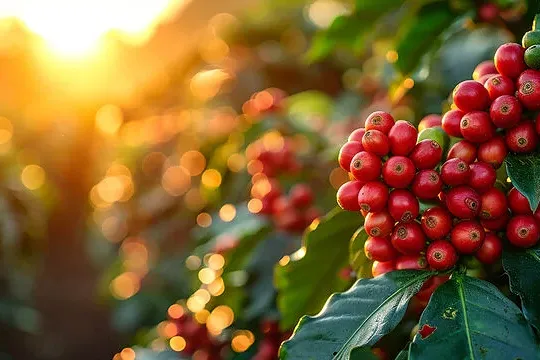
Rooted in the birthplace of coffee
Jambo Star Coffee is an Ethiopian green coffee exporter working directly with cooperatives and washing stations across six growing zones.
Our commitment to quality means every bean meets the highest standards — so the rich, distinctive flavours of Ethiopian coffee reach roasters around the world exactly as they left the highlands.
Built for roasters who ask questions
What we hold ourselves to on every contract — from the first sample through to the container seal.
Single-Origin Traceability
Every bag carries a lot code back to its washing station, kebele and harvest week. You always know exactly where your coffee grew.
In-House Cupping Lab
Each lot is cupped by Q-graders before shipment and again pre-loading, so what you approve in the sample is what lands at your port.
Fair Farmgate Pricing
We buy at or above ECX reference and pay quality premiums directly to the cooperatives that produced the lot.
Moisture & Density Control
Every container is checked for 10–11.5% moisture and 0.65+ water activity before sealing, protecting cup life in transit.
Complete Export Docs
Phytosanitary, ICO certificate of origin, weight and quality certificates prepared and couriered without chasing.
One Point of Contact
A dedicated account lead from sample request through to arrival — one person, one thread, no handovers.
Current single-origin lots
Filter by process or grade, add what interests you to the sample tray, and send us one inquiry for the whole selection.
6 highlands, 6 distinct cups
Altitude, rainfall and processing tradition change every few hundred kilometres in Ethiopia. Pick a region to see what it tastes like.
Grades & export specifications
Ethiopian coffee is graded by defect count per 300 g sample. Here is what each grade means in practice, and how we pack it.
| Grade | Process | Defects / 300 g | Screen size | Moisture | Typical cup | Packing |
|---|---|---|---|---|---|---|
| Grade 1 | Washed | 0 – 3 / 300 g | 15 – 16 | 10 – 11.5% | 86 – 92 | 60 kg jute + GrainPro |
| Grade 1 | Natural | 0 – 3 / 300 g | 14 – 16 | 10 – 11.5% | 85 – 90 | 60 kg jute + GrainPro |
| Grade 2 | Washed | 4 – 12 / 300 g | 14 – 15 | 10 – 12% | 84 – 87 | 60 kg jute |
| Grade 3 | Natural | 13 – 25 / 300 g | 14+ | 10 – 12% | 82 – 85 | 60 kg jute |
| Grade 4 | Natural | 26 – 45 / 300 g | 14+ | 10 – 12% | 80 – 84 | 60 kg jute |
| Grade 5 | Natural | 46 – 100 / 300 g | 13+ | 10 – 12.5% | 78 – 82 | 60 kg jute |
Cup scores are indicative ranges to SCA protocol. Exact figures are confirmed on the pre-shipment sample for each contracted lot.
From cherry to container
Each stage has a checkpoint we can show you evidence for. Nothing leaves the mill without passing all of them.
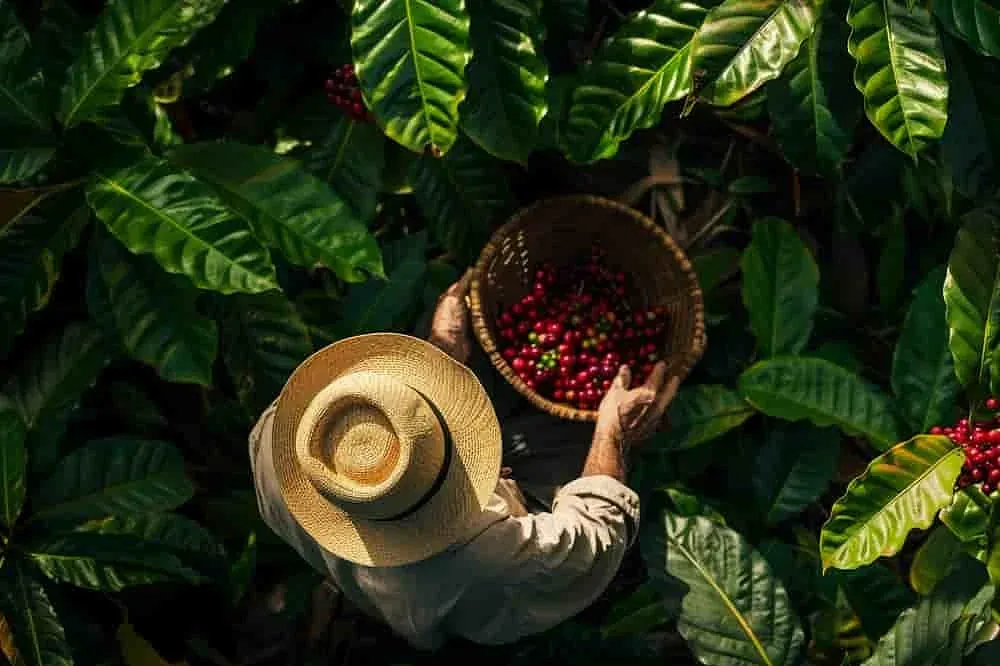
Sourcing & Farmer Partnership
We work season-round with cooperatives and private washing stations across six growing zones, agreeing volumes and quality targets before the first cherry is picked.
Selective Hand Picking
Only fully ripe red cherries are harvested, in multiple passes across the same trees. Underripes are separated at delivery and never enter our specialty lots.
Washing & Drying
Washed lots ferment 24–48 hours then dry on raised beds for 10–14 days. Naturals dry in the cherry for 18–21 days with hourly turning and afternoon shading.
Hulling, Grading & Sorting
Dry milling, density grading, screen sizing and optical colour sorting, finished with a hand-sorting pass to remove any remaining defect.
Cupping & Approval
Q-graders score each lot to SCA protocol. Pre-shipment samples go to you for approval, and we cup the same lot again immediately before loading.
Packing & Documentation
60 kg jute with GrainPro or vacuum liners, marked with lot code and container seal. ICO, phytosanitary and quality certificates issued in parallel.
Shipping & Arrival
Trucked to Djibouti or Modjo dry port, loaded FOB or CIF as agreed, with tracking updates and documents couriered ahead of arrival.
Quality that starts at the farmgate
Better coffee is not a sorting problem — it is a farming one. Most of what we invest goes back up the chain, to the people who decide which cherries get picked.
- Quality premiums paid directly to producing cooperatives, not intermediaries.
- Seasonal agronomy training on pruning, composting and cherry selection.
- Shade-tree and seedling distribution programmes with partner kebeles.
- Raised-bed and drying-shed funding at partner washing stations.
- Water recycling and pulp composting at every washed station we buy from.
- Transparent lot codes so roasters can publish origin data to their own customers.
Everything you need to place an order
Terms, timings and paperwork, stated up front — so you can price a programme without a round of emails first.
Ports & Terms
FOB Djibouti as standard; CIF, CFR and EXW Modjo available on request. We also handle LCL consolidation for smaller programmes.
Lead Times
Sample dispatch in 3–5 days. Contracted lots ship 3–4 weeks from confirmed order, subject to milling and vessel schedule.
Packaging
60 kg jute with GrainPro liner as standard. 30 kg vacuum bricks, 1 kg samples and private-label sacks available.
Documentation
Commercial invoice, packing list, ICO certificate of origin, phytosanitary certificate, weight and quality certificates.
Payment
Irrevocable L/C at sight, CAD, or T/T against documents. Terms discussed per contract volume and history.
Samples
Free 200–300 g pre-shipment and offer samples worldwide. Type samples couriered within a week of request.
From the highlands
Before you ask
The things buyers ask us most often. If yours is not here, send it over — we answer within one working day.
Ask a questionGet the new-crop offer list first
One email per harvest cycle: fresh arrivals, cup scores, remaining volumes. No marketing filler.
Request samples or a quotation
Tell us the profile, volume and destination port you have in mind. We will come back with availability, a price and a sample on its way.